1.2. Vowels ✅
1.2.1. Basic Vowels
A vowel is a speech sound produced with little restriction in the vocal tract.
Neolatin has a total of seven vowel sounds. This is because Neolatin has closed vowels and open vowels.
Closed Vowels
| Graphemes | IPA Symbol | Example | Transcription |
|---|---|---|---|
<e>, <é> | [e] Close-mid front unrounded vowel | - Estella - Léttera | - [es't̪el.la] - ['let.t̪e.ɾa] |
<i>, <í> | [i] Close front unrounded vowel | - Artista - Vía | - [aɾ't̪is.t̪a] - ['vi.a] |
<o>, <ó> | [o] Close-mid back rounded vowel | - Gomma - Pólvere | - ['gom.ma] - ['pol.ve.ɾe] |
<u>, <ú> | [u] Close back rounded vowel | - Tu - Súccaro | - [ˈtu] - ['suk.ka.ɾo] |
Open Vowels
| Graphemes | IPA Symbol | Example | Transcription |
|---|---|---|---|
<a>, <à> | [a] Open front unrounded vowel | - Vacca - Àngolo | - ['vak.ka] - ['aŋ.go.lo] |
<è> | [ɛ] Open-mid front unrounded vowel | Gènte | [ˈd͡ʒɛn̪.t̪e] |
<ò> | [ɔ] Open-mid back rounded vowel | Còrpo | ['kɔɾ.po] |
<u>, <ú> | [u] Close back rounded vowel | - Tu - Súccaro | - [ˈt̪u] - ['suk.ka.ɾo] |
Notice that the vowel “a” has a grave accent when stressed. Other languages, like Spanish, use the acute accent. Neolatin uses the grave accent to indicate open vowels. In the case of [ɛ] and [ɔ], these are, more specifically, open-mid vowels rather than fully open vowels.
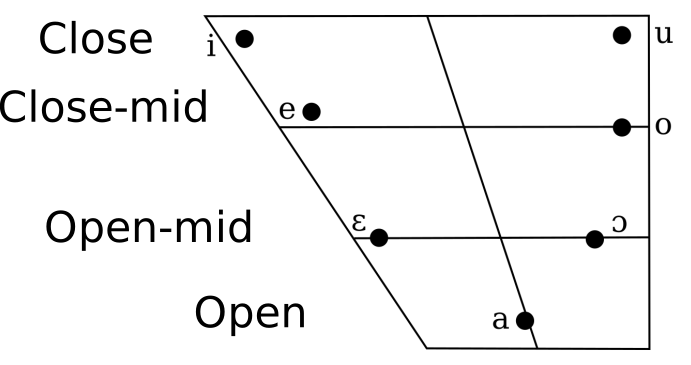
Vowel breaking?
Proto-Romance and the majority of modern Romance languages contain both open vowels and closed vowels. Of the modern Romance languages, Spanish and Romanian do not have open vowels. Various Romance languages went through a process known as “vowel breaking” (also known as “diphthongization”) where under certain conditions, an open vowel turned into a diphthong. The open vowels /ɛ/ and /ɔ/ went through vowel breaking in French and Italian only in open syllables. In Spanish, it went through vowel breaking in both open syllables (syllables that end in a vowel) and closed syllables (syllables that end in a consonant).
The final result was that the open vowels /ɛ/ and /ɔ/ became ie and ue in Spanish, ie and uo in Italian and ie and eu in French.
| Type of Syllable | Latin | Portuguese | Spanish | Catalan | French | Italian | Romanian |
|---|---|---|---|---|---|---|---|
| Open | petram, focum | pedra, fogo | piedra, fuego | pedra, foc | pierre, feu | pietra, fuoco | piatră, foc |
| Closed | festam, portam | festa, porta | fiesta, puerta | festa, porta | fête, porte | festa, porta | ∅, poartă |
As a curiosity, the distinct difference in the vowel inventories between Spanish and Portuguese, two languages that are otherwise quite similar, results in a particular joke. Some speakers of Portuguese say that they drink “Coca-Cola” [kɔ.kɐˈkɔ.lɐ] (with an open O), whereas their Spanish speaking neighbors drink “Cueca Cuela” [kwe.kaˈkwe.ka] (with a diphthong).
It is worth noting that although this rule works well for adapting Spanish words into other Romance languages, it does not always work. Aside from taking into account whether the syllable is open or closed, it also depends on if the word was inherited or borrowed. For example, any Spanish words ending in “-iente” would, in reality, correspond to a Neolatin word ending in “-iènte” (ex: “suficiente” in Neolatin is “sufficiènte, “conveniente” in Neolatin is “conveniènte”). This is because the suffix and these words were borrowed from Latin ("convenientem" and "sufficientem"). Therefore, the inherited sound shift does not apply.
Another notable example in Spanish of a borrowing is the word “costa”. If the word were inherited, the evolution would have been “cuesta”; however, “costa” was borrowed from either Galician or Catalan. This word was borrowed, but because Spanish lacked open vowels, it is pronounced with a closed O.
Lastly, it is worth noting that although Spanish typically lacks open vowels, there are allophones (variants of a phoneme) that resemble open vowels, either in certain dialects or in casual speech. For example, instead of the close-mid front unrounded vowel [e], there may be the use of the mid front unrounded vowel [e̞], which is between [e] and the open-mid back rounded vowel [ɔ]. As another example, although [ɔ] typically never appears in modern Spanish, it is present to some extent as an allophone of [o] in dialects of Southeastern Spain. These sounds do not change the meaning of the words. For this reason, they are allophones.
UNOFFICIAL: Open O Instead of Diphthong
An unofficial option to make certain words inherited from Latin more recognizable in pronunciation is to pronounce words containing /au/ with an open O: [ɔ].
This would apply to the words below:
| Word | Recommended Pronunciation | Unofficial Pronunciation |
|---|---|---|
| Auro | ['aw.ɾo] | ['ɔ.ɾo] |
| Causa | ['kaw.sa] | ['kɔ.sa] |
| Necausa | [ne'kaw.sa] | [ne'kɔ.sa] |
| Aurellîa | [awˈɾeʎ.ʎa] | [ɔˈɾeʎ.ʎa] |
| Paraula | [pa'ɾaw.la] | [pa'ɾɔ.la] |
| Pauco | ['paw.ko] | ['pɔ.ko] |
| Tauro | ['t̪aw.ɾo] | ['t̪ɔ.ɾo] |
| Pàupero | [paw'pe.ɾo] | [pɔ'pe.ɾo] |
Compare these to the cognates in modern Romance languages:
| Portuguese | Spanish | Catalan | French | Italian | Romanian | Number of Languages With Open Vowel |
|---|---|---|---|---|---|---|
| ouro [ˈo(w).ɾu] | oro [ˈo.ɾo] | or [ˈɔr] | or [ˈɔʁ] | oro [ˈɔːro] | aur [ˈa.ur] | 3 |
| coisa [ˈkoj.zɐ] | cosa [ˈko.sa] | cosa [ˈkɔ.zə] | chose [ˈʃoz] | cosa [ˈkɔːza] | ∅ | 2 |
| orelha [oˈɾe.ʎɐ] | oreja [oˈɾe.xa] | orella [uˈɾɛ.ʎə] | oreille [ɔˈʁɛj] | orecchio [oˈɾek.kjo] | ureche [uˈɾe.ke] | 1 |
| pouco [ˈpo(w).ku] | poco [ˈpo.ko] | poc [ˈpɔk] | peu [ˈpø] | po' / poco [ˈpɔ] / [ˈpɔːko] | ∅ | 2 |
| touro [ˈto(w).ɾu] | toro [ˈt̪o.ɾo] | toro [ˈtɔ.ɾu] | taureau [ˈtɔ.ʁo] | toro [ˈtɔ.ro] | taur [ˈta.uɾ] | 3 |
| pobre [ˈpɔ.bɾi] | pobre [ˈpo.β̞ɾe] | pobre [ˈpɔ.βɾə] | pauvre [ˈpo.vʁ] | povero [ˈpɔ.ve.ɾo] | ∅ | 3 |
Furthermore, the diphthong "àu", written with a grave accent, is sometimes used to differentiate certain words containing just "au", without a grave accent. For example, to differentiate the word "causa" ["thing"] from the Latin borrowing "càusa" ["cause"].
This option is not recommended by the creator and promoter of Neolatin, Jordi Cassany-Bates.
1.2.2. Vowel Quantity
“Vowel quantity” (also known as “vowel length”) is the duration of a vowel when pronounced. Neolatin distinguishes between short vowels and long vowels.
This phenomenon is also seen in Latin, Proto-Romance and Italian (conserved from Proto-Romance). Most Romance languages today have lost this distinction. Neolatin maintains this conservative characteristic, like others, because being conservative encompasses the variation in modern Romance languages. Optionally, it is also possible to not pronounce it.
A long vowel is pronounced in a syllable that is:
- An open syllable (a syllable that in a vowel)
- The tonic syllable (the syllable that receives the primary stress in the word)
In other words, a long vowel occurs in stressed open syllables.
Long vowels cannot occur before:
- A geminated consonant (ex: capello)
- A consonant cluster (ex: pasta)
In all other cases, the vowel is pronounced as a short vowel.
Short Vowels
| Grapheme(s) | IPA Symbol | Example(s) | Transcription |
|---|---|---|---|
<a>, <à> | [a] | - Caldo - Àrbore | - [ˈkal.do] - [ˈar.bo.ɾe] |
<e>, <é> | [e] | - Ella - Créscere | - [ˈel.la] - [ˈkres.ˈt͡ʃe.ɾe] |
<è> | [ɛ] | Dènte | [ˈdɛn̪.t̪e] |
<i>, <í> | [i] | - Mille - Símbolo | - [ˈmil.le] - [ˈsim.bo.lo] |
<o>, <ó> | [o] | - Coppa - Tórtora | - [ˈkop.pa] - [ˈt̪oɾ.t̪o.ɾa] |
<ò> | [ɔ] | Còntra | [ˈkɔn̪.t̪ɾa] |
<u>, <ú> | [u] | - Fuste - Legúmene | - [ˈfus.t̪e] - [leˈɡu.me.ne] |
Long Vowels
| Grapheme(s) | IPA Symbol | Example(s) | Transcription |
|---|---|---|---|
<a>, <à> | [a:] | - Mano - Casa - Amàbile | - [ˈmaːno] - [ˈkaːsa] - [aˈmaːbi.le] |
<e>, <é> | [e:] | - Rete - Névere | - [ˈreːte] - [aˈveːɾe] |
<è> | [ɛ:] | Bène | [ˈbɛːne] |
<i>, <í> | [i:] | - Filo - Dícere | - [ˈfiːlo] - [ˈdiːʧe.ɾe] |
<o>, <ó> | [o:] | - Dono - Dódece | - [ˈdoːno] - [ˈdoːde.ʧe] |
<ò> | [ɔ:] | Jòco | [ˈʤɔːko] |
<u>, <ú> | [u:] | - Puro - Música | - [ˈpuːɾo] - [ˈmuːsi.ka] |
1.2.3. Diphthongs
A diphthong is the occurrence of two vowels in one syllable. It is pronounced by gliding quickly from the first vowel (the weak vowel) to the second (the strong vowel).
To better understand how diphthongs are formed, observe the concept of “strong vowels” and “weak vowels”.
The vowels “i” and “u” are weak vowels because their sounds change when followed by another vowel in a diphthong. In the context of syllables, weak vowels are also known as “semiconsonants”, “semivowels” or “glides”. They are phonetically similar to the sound of a vowel, but they function as the boundary of a syllable (at the front, back or both).
Next to a strong vowel, the vowel “i” turns into a voiced palatal approximant [j], while the vowel “u” turns into the voiced labial-velar approximant [w].
The other vowels, “a”, “e” and “o” are strong vowels because their sounds do not change in a diphthong. In a diphthong, the strong vowel has a little more stress than the weak vowel.
Ascending Diphthongs
In ascending diphthongs (also known as “true diphthongs”), the weak vowel (“i” or “u”) comes first and the strong vowel last (“a”, “e” or “o”).
| Diphthong | IPA | Example(s) | IPA Transcription |
|---|---|---|---|
| ia | /ja/ | Piano | [ˈpja.no] |
| ie | /je/ | - Sèrie - Pietate | - [ˈsɛ.ɾje] - [pjeˈt̪a.t̪e] |
| iè | [jɛ] | Pietro | [ˈpjɛːt̪ro] |
| io | /jo/ | Tokyo | [ˈt̪o.kjo] |
| iò | /jɔ/ | Piolo | [ˈpjɔ.lo] |
| iu | /ju/ | Diurno | [ˈd̪juɾno] / [d̪iˈuɾ.no] |
| ua | /wa/ | - Quasi - Quale - Equale | - [ˈkwa.si] - [ˈkwa.le] - [eˈkwa.le] |
| ue | /we/ | - Cuello - Cuesto - Distingue | - [ˈkwel.lo] - [ˈkwes.t̪o] - [d̪iˈstiɳ.ɡwe] |
| uè | /wɛ/ | Guèrra | [ˈɡwɛ.ra] |
| ui | /wi/ | - Accuí - Guida | - [akˈkwi] - [ˈɡwi.d̪a] |
| uo | /wo/ | Quotidiano | [kwo.t̪iˈd̪ja.no] |
| uò | /wɔ/ | Cuò | [ˈkwɔ] |
Descending Diphthongs
In descending diphthongs (also known as “false diphthongs”), the strong vowel comes first (“a”, “e” or “o”) followed by a weak vowel (“i” or “u”).
| Diphthong | IPA | Example(s) | IPA Transcription |
|---|---|---|---|
| ai | /aj/ | Jamàis | [ʤaˈmajs] |
| ei | /ej/ | - Maine - Sensei | - [ˈmejn] - [senˈsej] |
| èi | /ɛj/ | ??? | |
| oi | /oj/ | Boicottare | [boj.kotˈt̪a.ɾe] |
| òi | /ɔj/ | ??? | |
| au | /aw/ | - Pausa - Estao | - [ˈpaw.sa] - [ˈesˈt̪au] |
| eu | /ew/ | - Euròpa | - [ew.ɾɔ.pa] |
| èu | /ɛw/ | - Fèudo - Nèutro | [ˈfɛw.do] - [ˈnɛw.t̪ɾo] |
| ou | /ow/ | Souto | [ˈsow.t̪o] |
| òu | /ɔw/ | ??? |
1.2.4. Hiatus
A hiatus is the occurrence of two separate vowel sounds in two different syllables with no intervening consonant.
Type 1: Stressed Weak Vowel (i or u) + Unstressed Strong Vowel (a, e or o)
| Hiatus | IPA | Example(s) | IPA Transcription |
|---|---|---|---|
| ía | /i.a/ | - Día - Vía - María - Fotografía | - [ˈd̪i.a] - [ˈvi.a] - [maˈɾi.a] - [fo.t̪o.gɾaˈfi.a] |
| íe | /i.e/ | ??? | |
| iè | /i.ɛ/ | Cliènte | [kliˈɛn̪.t̪e] |
| ío | /i.o/ | Tío | [ˈt̪i.o] |
| iò | /i.o/ | ??? | |
| úa | /u.a/ | - Dualitate - Continuarà | - [d̪u.a.liˈt̪a.t̪e] - [kon̪.t̪i.nu.aˈɾa] |
| úe | /u.e/ | Duetto | [d̪uˈet.t̪o] |
| uè | /u.ɛ/ | Cruènto | [kɾuˈɛn̪.t̪o] |
| úo | /u.o/ | Continúo | [kon̪.t̪iˈnu.o] |
| uò | /u.ɔ/ | Fluòro | [fluˈɔ.ɾo] |
Type 2: Unstressed Strong Vowel (a, e or o) + Stressed Weak Vowel (i or u)
| Hiatus | IPA | Example(s) | IPA Transcription |
|---|---|---|---|
| aí | /a.i/ | Paraíba | [pa.ɾaˈi.ba] |
| aú | /a.u/ | Raúl | [raˈul] |
| eí | /e.i/ | Vehículo | [veˈi.ku.lo] |
| eú | /e.u/ | Reunione | [re.uˈnjo.ne] |
| oí | /o.i/ | Coincídere | [ko.in̠ˈt͡ʃi.de.ɾe] |
| oú | /o.u/ | ??? |
Type 3: Two Weak Vowels (i or u)
| Hiatus | IPA | Example(s) | IPA Transcription |
|---|---|---|---|
| uí | /u.i/ | Fluido | [fluˈi.do] / [ˈflwi.do] |
| iú | /i.u/ | ??? |
Type 4: Two Strong Vowels (a, e or o)
| Hiatus | IPA | Example(s) | IPA Transcription |
|---|---|---|---|
| ae | /a.e/ | - Paese - Aeropòrto - Maestro | - [paˈe.se] - [a.e.ɾoˈpɔɾ.t̪o] - [maˈes.t̪ɾo] |
| ao | /a.o/ | Laos | [ˈla.os] |
| aè | /a.ɛ/ | Aèdo | [aˈɛ.d̪o] |
| aò | /a.ɔ/ | - Aòrta - Caòtico | - [aˈɔɾ.t̪a] - [kaˈɔ.t̪i.ko] |
| ea | /e.a/ | Leale | [leˈa.le] |
| eo | /e.o/ | - Teoría - Neolatino - Leone | - [t̪e.oˈɾi.a] - [ne.o.laˈt̪i.no] - [leˈo.ne] |
| eò | /e.ɔ/ | Beòtia | [beˈɔt.ʦja] |
| eè | /e.è/ | ??? | |
| oa | /o.a/ | Coágulo | [koˈa.gu.lo] |
| oe | /o.e/ | Cohesione | [ko.eˈsjo.ne] |
| oè | /o.ɛ/ | Noè | [ˈno.ɛ] |
| oò | /o.ɔ/ | - Coòpero - Cohòrte | - [koˈɔ.pe.ɾo] - [koˈɔr.t̪e] |
| èa | /ɛ.a/ | Mèa | [ˈmɛ.a] |
| èe | /ɛ.e/ | ??? | |
| èo | /ɛ.o/ | Mèo | [ˈmɛ.o] |
| òa | /ɔ.a/ | Òase | [ɔˈa.se] |
| òe | /ɔ.e/ | Heròe | [eˈɾɔ.e] |
| òo | /ɔ.o/ | ??? |
Type 5: Identical Vowels in a Row
| Hiatus | IPA | Example(s) | IPA Transcription |
|---|---|---|---|
| aa | /a.a/ | Nausikàa | [nauˈsi.ka.a] |
| ee | /e.e/ | Neerlandese | [ne.er.lan̪ˈd̪e.se] |
| ii | /i.i/ | ??? | |
| oo | /o.o/ | - Cooperatione - Coordinatione | - [ko.o.pe.ɾatˈt͡sjo.ne] - [ko.or.di.natˈt͡sjo.ne] |
| uu | /u.u/ | Continuum | [kon̪ˈt̪i.nu.um] |
1.2.5. Triphthongs
A triphthong is the occurrence of three vowels in one syllable. They consist of a weak vowel (“i” or “u”) followed by a strong vowel (“a”, “e” or “o”) and then another weak vowel.
| Triphthong | IPA | Example(s) | IPA Transcription |
|---|---|---|---|
| iai | /jaj/ | Cambiai | [kamˈbjaj] |
| iei | /jej/ | ??? | |
| ièi | /jɛj/ | ??? | |
| ioi | /joj/ | Dioico | [ˈd̪joi̯.ko] |
| iòi | /jɔj/ | Cardioide | [karˈdjɔj.de] |
| iau | /jaw/ | Miau | [ˈmjau] |
| ieu | /jew/ | ??? | |
| ièu | /jɛw/ | Halièutica | [al.jɛw.t̪i.ka] |
| iou | /jow/ | ??? | |
| iòu | /jɔw/ | ??? | |
| uai | /wai/ | Paraguay | [pa.ɾaˈɡwaj] |
| uei | /wej/ | Camagüey | [ka.maˈgwei̯] |
| uèi | /wɛj/ | ??? | |
| uoi | /woj/ | ??? | |
| uòi | /wɔj/ | ??? | |
| uau | /waw/ | Uau | [ˈwaw] |
| ueu | /wew/ | ??? | |
| uèu | /wɛw/ | ??? | |
| uou | /wow/ | ??? | |
| uòu | /wɔw/ | ??? |